
Business Informatics
About the Study Programme
Analysing regional labour markets where graduates of related business informatics programmes find employment, we concluded that demand for this profile is high, and that most graduates easily find - typically well-paid - jobs in local IT companies, IT departments and sectors within private and public enterprises, public administration, as well as international companies and organisations.
The key comparative advantage of graduates of this programme is that, alongside knowledge and skills in business informatics, they also master economics, management and business - making them highly competitive in the labour market.
The objectives of the programme are to prepare future graduate economists - business informaticians to be able to:
- independently or as part of a team, successfully perform tasks in business economics and management, with an emphasis on tasks related to business informatics;
- apply agile project management principles to solving practical business problems and systematically pursue innovative business solutions through teamwork;
- apply a multidisciplinary approach to solving business and scientific challenges in business informatics and related fields, and improve business decision-making using economic theory, business informatics theory and scientific decision-making methods;
- continue their studies at the second cycle (master's) level.
Structure of the Study Programme
The first-cycle programme in Business Informatics lasts four academic years and carries 240 ECTS points.
The programme is structured to be complete, comprehensive and aligned with the Faculty's other programmes (first, second and third cycle) according to the 4 + 1 + 3 model.
Academic Title
Upon completion of the first cycle, the student is awarded the academic title of Bachelor of Science in Economics - 240 ECTS, with an indication of the study programme Business Informatics.
Subjects
Students will gain competencies, knowledge and skills to perform structural systems analysis and business process analysis, model and design business information systems, and build corresponding models.
They will also master the fundamentals of databases, programming, multimedia technologies, agile project management and digital marketing.
Students will be qualified to manage the development of business information systems, ICT projects and teams in ICT companies, as well as ICT organisational units within organisations, enterprises and institutions. Upon graduation, they will have the skills, knowledge and competencies to start their own ICT business or work as freelancers in the domestic, foreign or virtual labour market, as well as to establish knowledge management information systems in various types of economic and non-economic entities, to independently analyse data, discover patterns in data, and make decisions based on business intelligence systems and analytical tools.
Year 1
Semester 1
Semester 2
- Software Development Methodologies
- Fundamentals of Statistical Analysis
- Financial Accounting
- Management
Year 2
Semester 3
Semester 4
* Elective 1 - choose one of: English for Economists I, German for Economists I, Russian for Economists I.
Year 3
Semester 5
- Entrepreneurship and Innovation
- Marketing
- Business Process Management
- Digital Technologies and Digital Business Models
- Elective 2**
Semester 6
- Human Resource Management
- Databases
- Economic-Mathematical Models and Methods
- Elective 3***
- Professional Internship
** Choose one of: Business Information Systems Design, Information Systems for Business Planning Support. *** Choose one of: Management Information Systems, Knowledge Management Systems.
Year 4
Semester 7
- E-Business
- Integrated Business Software Solutions
- Elective 4****
- Elective 5*****
- Professional Internship
Semester 8
- Business Intelligence Systems
- Digital Business Transformation
- Elective 6******
- Elective 7*******
- Professional Internship
- Preparation and Defence of the Final Thesis
**** Choose one of: Strategic Management, Organisation of Business Systems. ***** Choose one of: Project Management, IT Project Management. ****** Choose one of: Digital Marketing, Marketing Research and Management. ******* Choose one of: Customer Relationship Management Systems, Business Analytics.
The final thesis is written on a subject of the student's choice, in the form of a professional (final) paper, and is defended before a three-member committee. ECTS points are awarded for a successfully defended final thesis, along with a single grade from 5 to 10, which is included in the average grade of passed exams.
Career Opportunities
The study programme opens a wide range of career opportunities in information technology and business informatics. Below are some of the jobs you will be qualified for after graduation.
Business Software Development
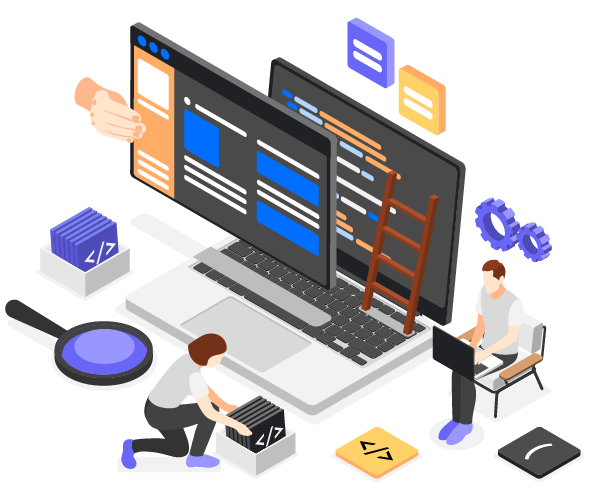
- Front-end Developer - responsible for developing and implementing the user interface of websites and applications using HTML, CSS, JavaScript and front-end frameworks. Focuses on the visual elements and interactions users see and use.
- Business Analyst - analyses business processes and proposes technological solutions for their improvement. Collects and processes data, collaborates with management and IT teams, and helps with strategic decisions.
- UI/UX Designer - a UI designer focuses on an application's visual elements, while a UX designer considers the overall user experience. The goal is an intuitive, easy-to-use interface that is aesthetically appealing.
- QA Tester - tests software using various techniques, including functional and security testing. Works with development teams to ensure high quality and stability before release.
Project Management

- Scrum Master - ensures the team follows Scrum methodology, removes obstacles and facilitates ceremonies such as daily stand-ups and sprint planning.
- Product Owner - manages the product backlog and defines priority tasks in line with business goals, communicates with stakeholders.
- Project Manager - responsible for planning, leading and controlling projects within budget, time and resources, covering all project aspects, including non-agile methodologies.
- Agile Coach - helps organisations adopt and improve agile practices and culture, provides coaching and training to teams and leaders.
Implementation and Management of Information Systems
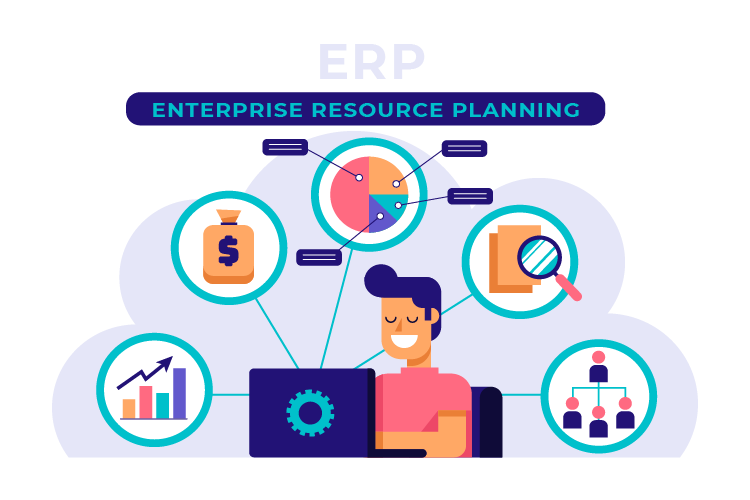
- ERP Consultant - implements and customises ERP systems (e.g. SAP, Oracle), analyses business processes and provides technical support, trains users.
- CRM Specialist - manages customer relationships using data-analysis tools, develops strategies to improve customer experience.
- IT System Administrator - maintains servers, networks and cloud infrastructure, ensures system stability and security, resolves technical issues.
Data Work and Management Support
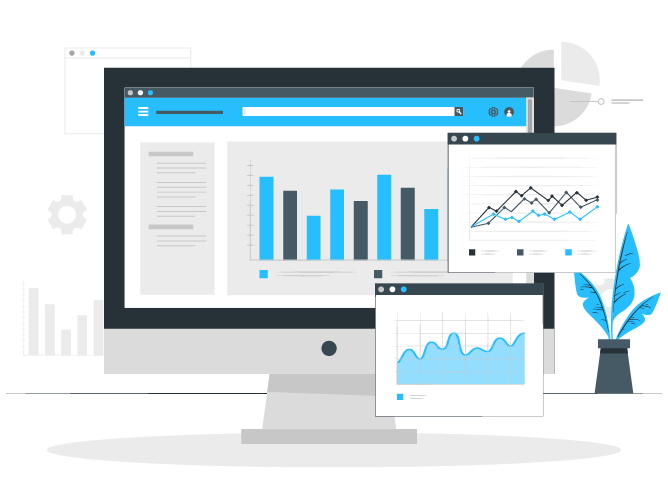
- Business Intelligence Specialist - analyses and visualises data (Power BI, Tableau) to support business decisions and track KPIs.
- Data Analyst - identifies patterns and trends in data using SQL, Python and R, supports business decisions through interpreting complex data.
- Database Administrator - manages databases, optimises performance, ensures security (backups, encryption), resolves technical issues.
- Data Warehouse Specialist - designs and implements a centralised data warehouse, uses SQL, ETL processes and BI platforms.
Digital Marketing

- Digital Marketing Analyst - analyses data from digital campaigns and optimises strategies for better ROI, using tools such as Google Analytics.
- SEO/SEM Expert - optimises websites for better search engine rankings and manages paid ads to increase visibility and traffic.
- Social Media Manager - manages a brand's social media presence and creates content strategies to increase engagement and visibility.