My Erasmus+ experience began when I decided I wanted to spend part of my studies abroad—to meet new people, become more independent, and improve my language skills. Around that time, at the beginning of May, a call was announced for student exchange at the University of Glasgow in Scotland. The decision came instantly—I would apply.
The application window was short, but with the help of the staff at the University and the Faculty of Economics, I managed to gather all the required documentation in time. The results were published in July 2017: I was accepted.
The period from September to December 2017 was marked by preparations. First, I had to find accommodation, and the student dormitory turned out to be the most affordable option. Then came the visa application process, searching for the most economical flight tickets, and arranging insurance.
On January 3rd, 2018, I was already on my way to Glasgow. I found the dorm without major difficulty, and in the room, I was welcomed by my roommate Emily from the USA. On the very first evening, I met people from different countries—France, Australia, Lithuania. The following days were reserved for orientation, getting to know the University, and exploring the city.
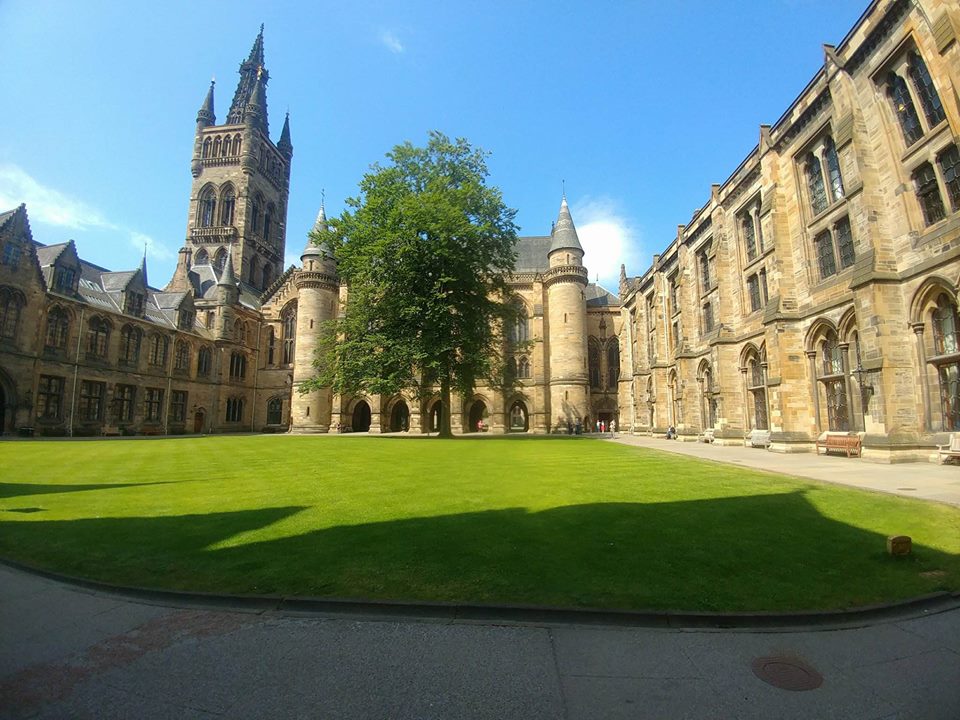
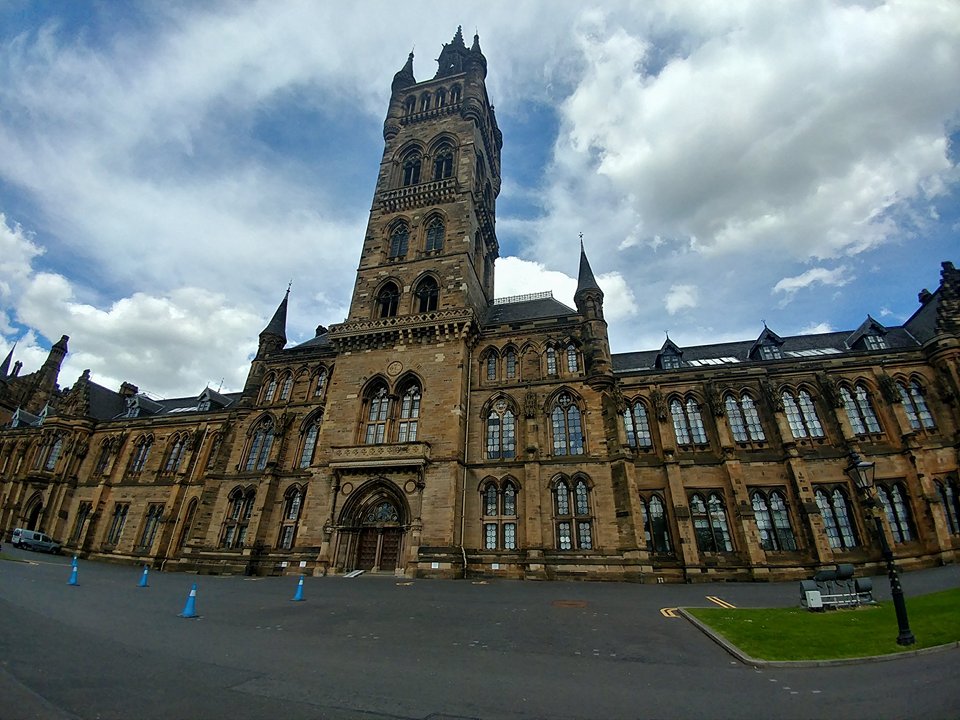
The University was founded in 1451, and its main building looks more like a castle than an educational institution. It was even considered as a possible stand-in for Hogwarts in the Harry Potter films.
Although not the capital, Glasgow is the largest city in Scotland—lively and full of students. The people are warm, friendly, and will repeat something several times if you don’t understand them at first. The Scots greatly value their tradition, and it’s quite common to hear bagpipes on the street. It’s also perfectly normal to see someone walking around in a kilt for no particular reason. The only downside is the weather—Glasgow is very rainy and often experiences strong winds.
The lectures weren’t too demanding. I had four courses and a total of eight hours of lectures per week. To pass an exam, one first had to write an essay on a given topic, which accounts for 30% of the grade. This is usually done at the end of February or the beginning of March. Final exams take place in May, in written form, and they carry 70% of the final grade. The exams typically last two hours, and from four offered questions, students choose two to answer in essay form. Results are usually available about twenty days after the exam. Foreign students are allowed to use dictionaries during the exams.
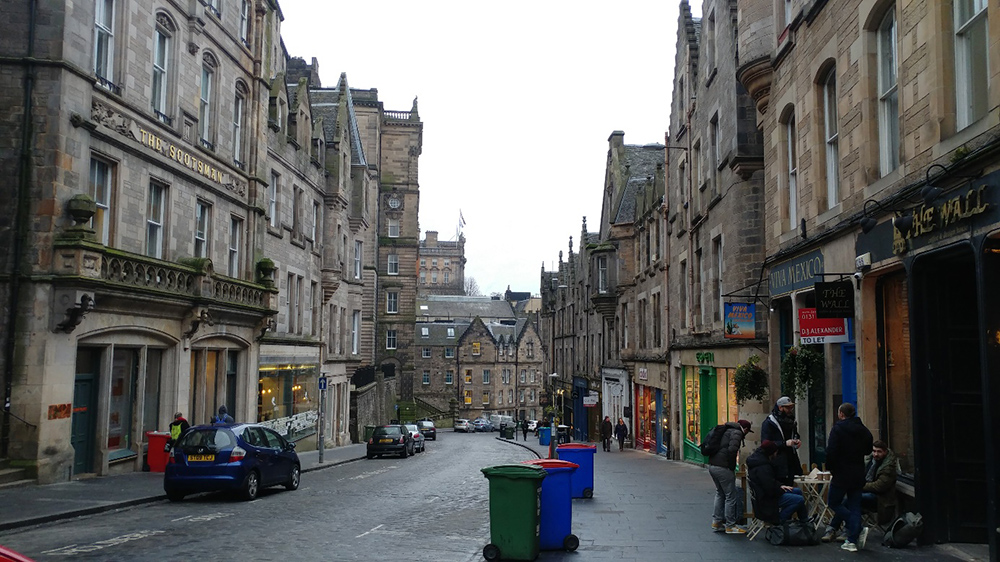
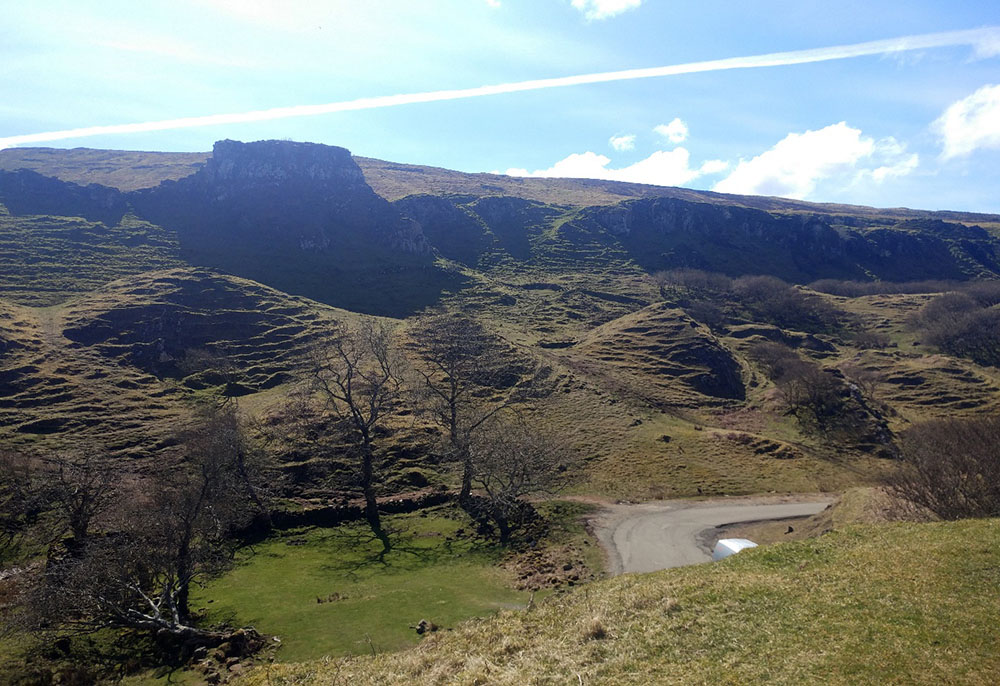
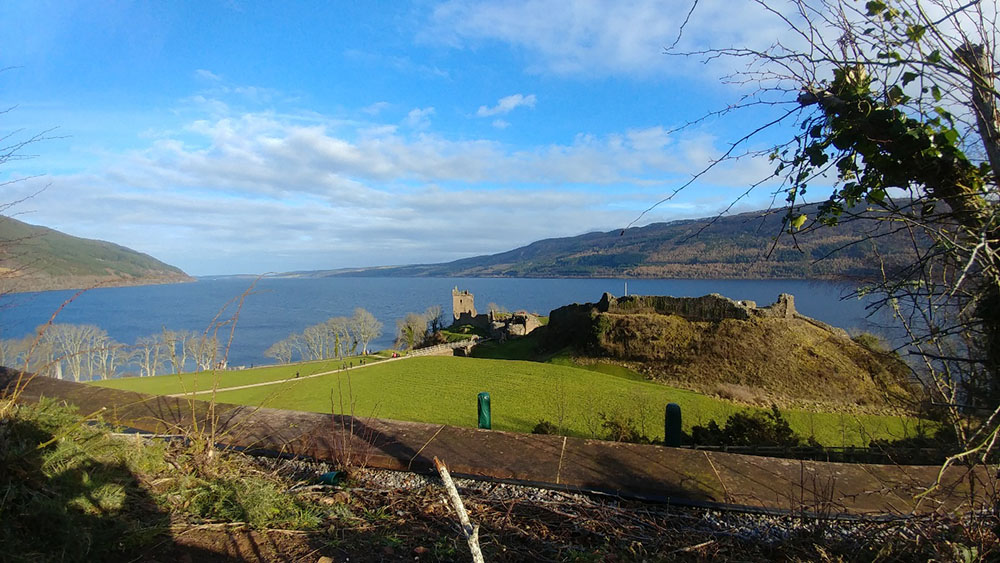
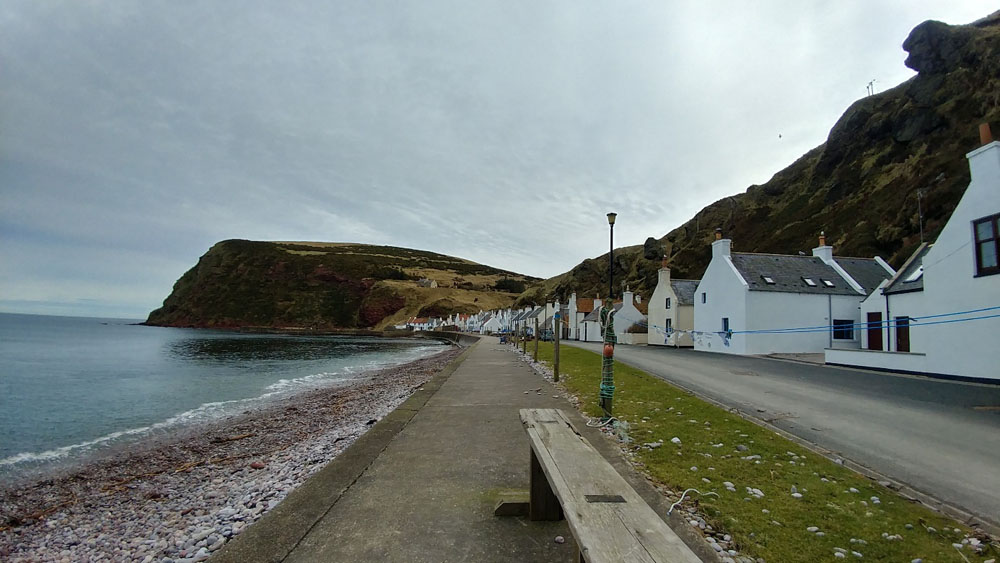
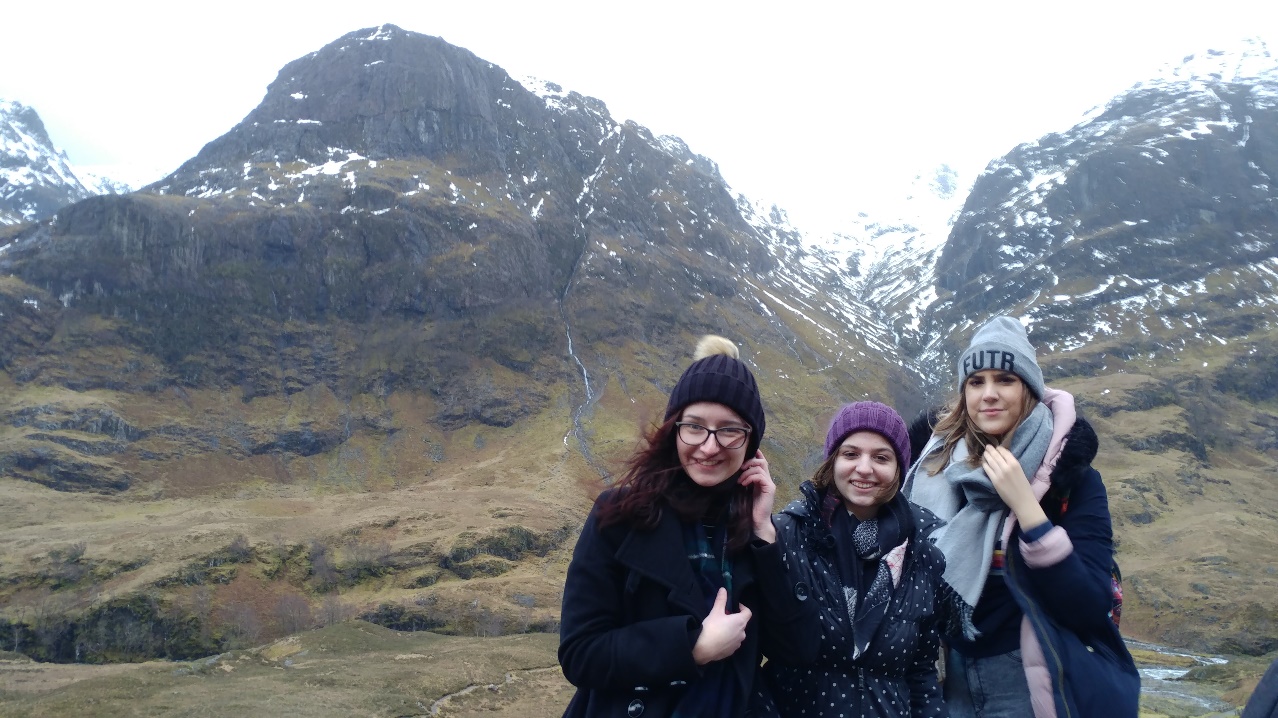
Erasmus+ exchanges leave plenty of room for travel as well. I managed to visit a large part of Scotland, which truly amazed me. Among the better-known destinations, I would mention Edinburgh, Loch Ness, and the Isle of Skye—named by National Geographic as the fourth most beautiful island in the world.
In addition to that, I made friends from various parts of the world and got to know different cultures, which may be the most beautiful part of the entire exchange.
I also learned to navigate unfamiliar places more easily—and that sometimes, one needs to get lost in a foreign city to truly experience it. And that solo travel is a wonderful thing, once you gather the courage to try it.
All in all, the Erasmus+ exchange was an unforgettable experience, and I would recommend it to everyone as the best way to step out of your comfort zone. If you have any questions about the Erasmus+ program, feel free to contact me at: maric.milica@outlook.com
Gallery